What Does Carbon Have to Do With It?
$17.95 – $139.95Price range: $17.95 through $139.95
Quantity Discounts Available! →
Investigate why the oysters are dying at an oyster farm.
- Test a simulated sample of ocean water to determine the level of carbon dioxide in the water.
- Use models of the carbon cycle to identify sources of carbon and to explain how carbon moves through Earth’s spheres.
- Explore how human activities can modify the amounts of carbon in Earth’s spheres.
Kit Includes
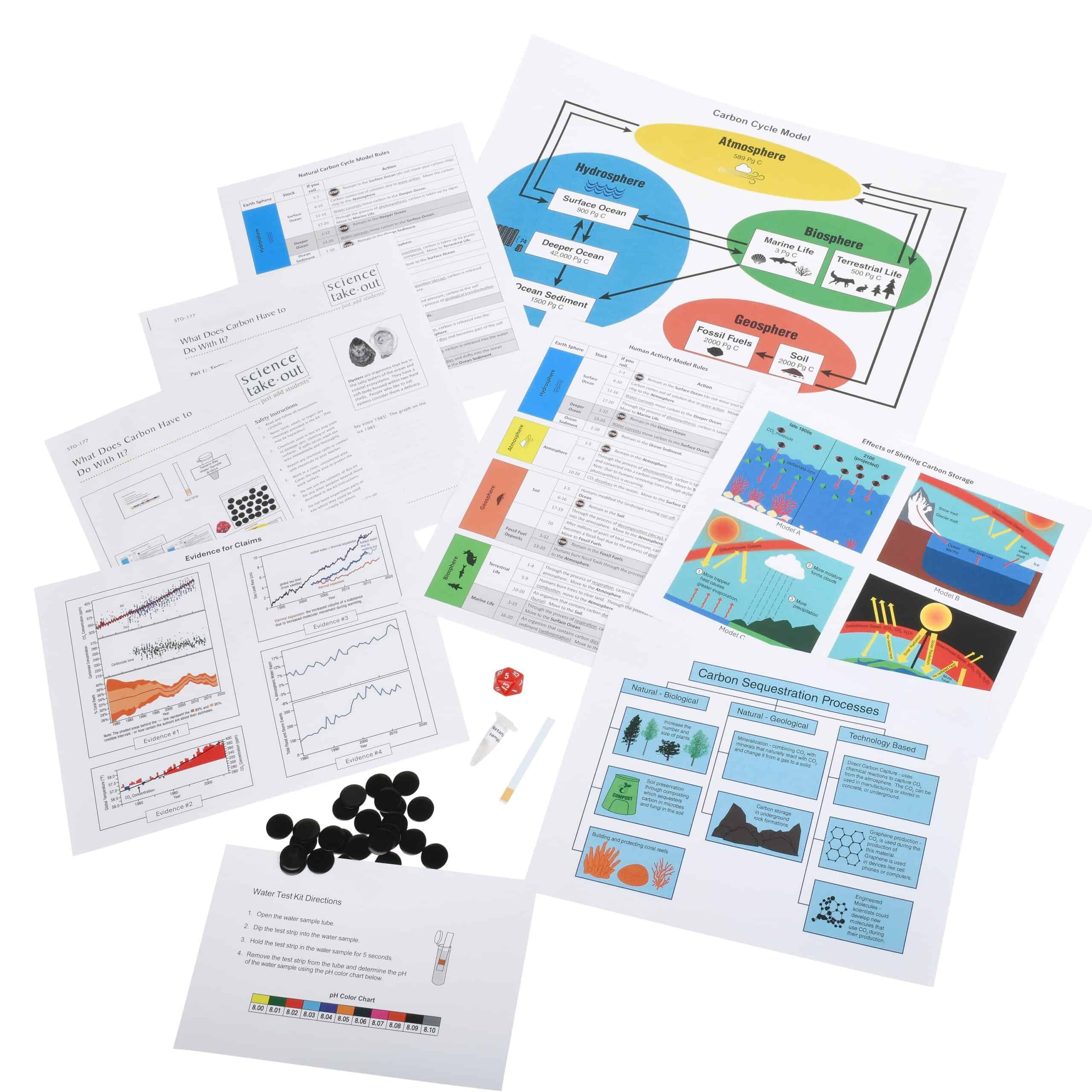
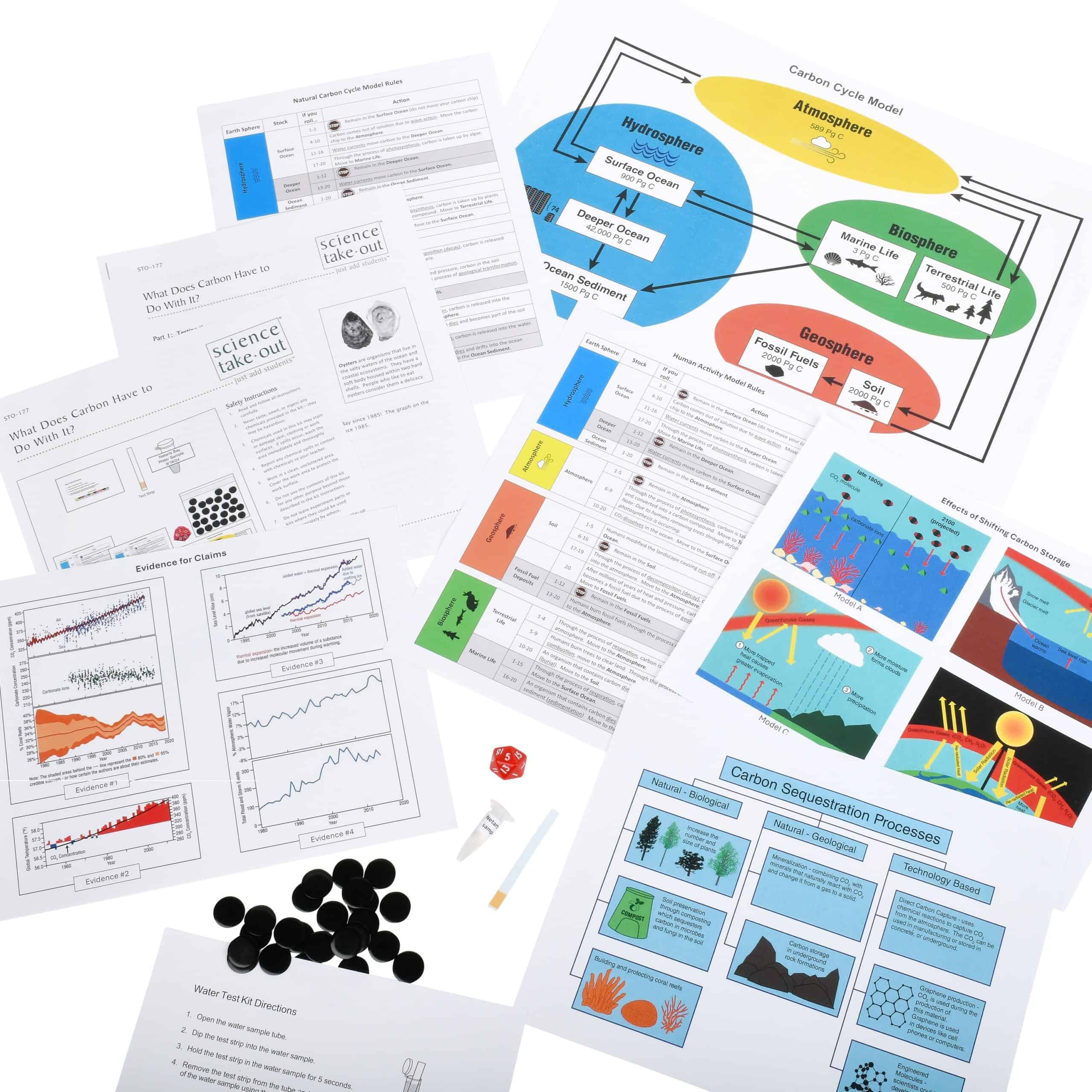
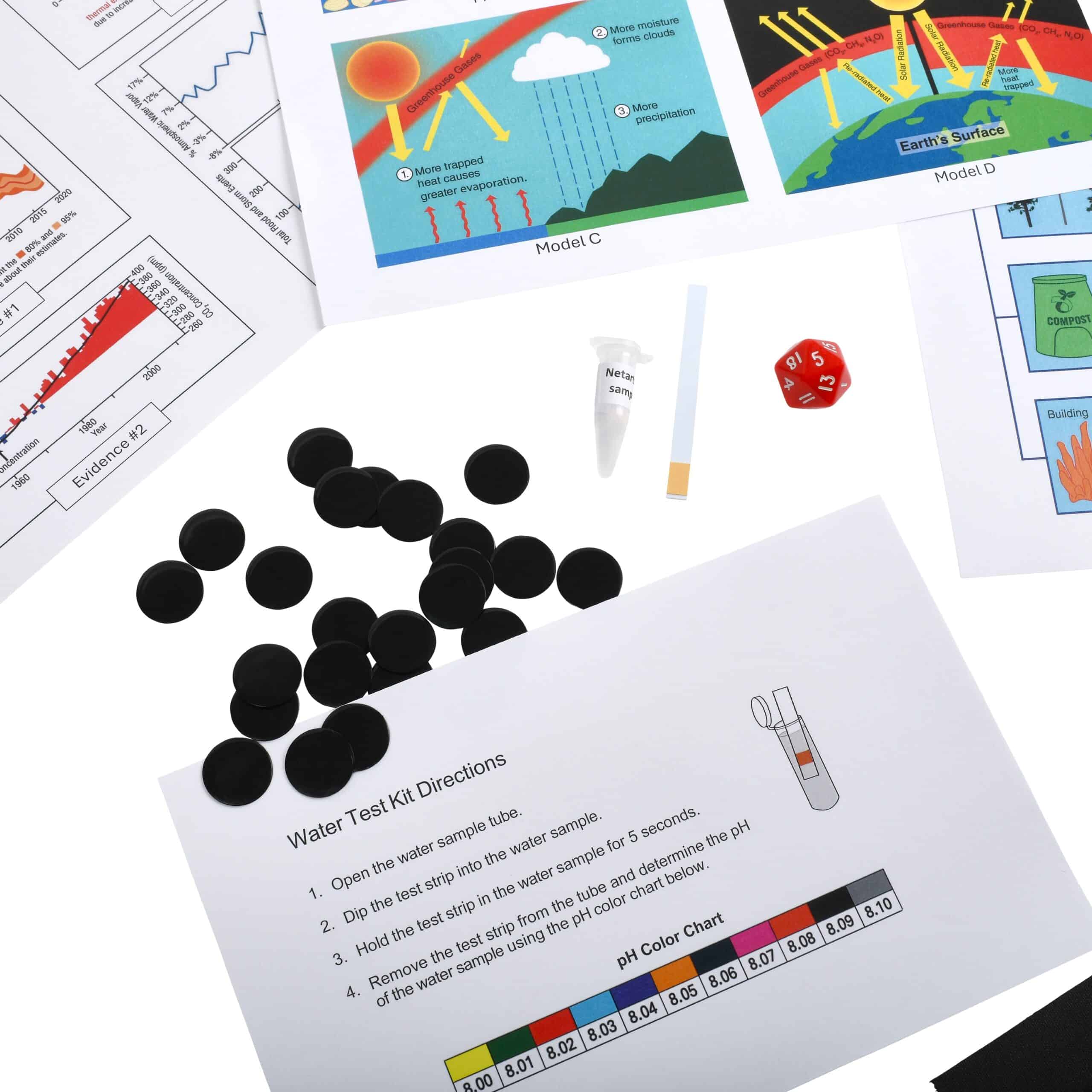
- Netarts Bay water sample (simulated)
- Water test strip (simulated)
- 20-sided dice
- 25 Black “carbon” disks (simulated)
- Water Test Kit Directions
- Carbon Cycle Model sheet
- Natural Carbon Cycle Model Rules sheet
- Human Activity Model Rules sheet
- Effects of Shifting Carbon Storage sheet
- Evidence Supporting Claims sheet
- Carbon Sequestration Processes sheet
Also Required
- Safety goggles
- Paper towel for clean-up
Quantity Discounts
Kits:
- 1 – 9 kits: $17.95 each
- 10 – 24 kits: $17.05 each
- 25+ kits: $16.16 each
Unassembled:
- 1 – 9 packs: $139.95 each
- 10+ packs: $132.95 each
Refills:
- 1 – 9 packs: $45.95 each
- 10+ packs: $43.95 each
Correlation to Next Generation Science Standards (NGSS) Shop by NGSS »
Performance Expectations:
HS-ESS2-6. Develop a quantitative model to describe the cycling of carbon among the hydrosphere, atmosphere, geosphere, and biosphere.
Science & Engineering Practices
Developing and Using Models - Develop and use a model based on evidence to illustrate the relationships between systems or between components of a system.
Disciplinary Core Ideas
ESS2.D: Weather and Climate
Gradual atmospheric changes were due to plants and other organisms that captured carbon dioxide and released oxygen.
Changes in the atmosphere due to human activity have increased carbon dioxide concentrations and thus affect climate.
Crosscutting Concepts
Energy and Matter - The total amount of energy and matter in closed systems is conserved.